
If you’re launching a new service-based business, one of the first questions that comes up is how big your website actually needs to be.
A common assumption is that a professional website requires multiple pages — a homepage, an about page, individual service pages, a blog, a portfolio, and more.
But in the early stages of business, that level of complexity often isn’t necessary.
A well-structured one-page website can introduce your service, explain how you work, and give potential clients a way to contact you — all within a single page.
The key is understanding what sections every one-page website needs so the page feels organized, professional, and easy for visitors to move through.
In this post, we’ll break down the 7 essential one-page website sections every service business needs, plus tips on what to include on a one-page website so it’s clear, professional, and ready to launch.
PIN THIS POST FOR LATER!


Why New Service Businesses Often Start With a One-Page Website
One of the biggest challenges for new entrepreneurs is getting their website live. It’s easy to assume a website must include multiple pages before it can be launched.
That assumption leads to planning multiple pages, writing more copy, and organizing more ideas. Before long, the project becomes bigger than expected and the website launch keeps getting delayed.
Starting with a one-page website removes much of that pressure.
Instead of building everything at once, you focus on a single page that introduces your service, explains how you work, and gives people a way to contact you.
Think of a productivity or systems coach just starting a new business. What they need most is a place where potential clients can quickly understand what they offer and book a consultation.
A one-page website makes that possible without months of planning.
As the business grows, the website can evolve with it — adding pages, content, or resources over time.
If you’re still deciding whether this type of website structure is right for your business, read One-Page Website vs Full Website: Which One Do You Need?
What to Include on a One-Page Website
A well-structured one-page website usually includes these key sections:
- Hero section (what you do and who you help)
- Introduction or About section
- Services or offers
- Process or “how it works”
- Testimonials or proof
- Call-to-action
- Contact section
Optional sections may include:
- Portfolio or examples
- Frequently asked questions
- Email newsletter signup or lead magnet
These sections are usually arranged in a way that guides visitors naturally from introduction to inquiry. Let’s walk through each section and how it works.
Related post: 8 Business Coach Website Examples Built With Elementor
1. Hero Section That Makes a Strong First Impression
Your Hero section is one of the most important one-page website sections, because it’s the very first thing visitors notice.
Within a few seconds, people decide whether to stay or leave. Your hero section should quickly answer two important questions:
- What do you do?
- Who do you help?
For example, a productivity or systems coach might use a headline like:
Productivity Systems for Female Entrepreneurs Who Want to Run Their Business Without Burnout
Under the headline, a short supporting sentence can provide more context:
Helping online business owners streamline workflows, organize tasks, and build systems that make their business easier to manage.
A strong hero section typically includes:
- A clear headline describing your service
- A short supporting sentence
- A call-to-action button (e.g. Book a Discovery Call)
- A professional photo or visual
When visitors immediately understand what your business offers, they are much more likely to keep scrolling.

2. About Section to Build Connection
Once visitors understand what you offer, they usually want to know who is behind the business.
The About section is a core one-page website section that builds trust and connection with potential clients.
For a new service-based business, this section doesn’t need to be a full biography. Instead, it should briefly explain:
- Who you are
- What you specialize in
- The type of clients you help
- Why you started your business
For example, a systems coach might explain that they previously managed operations for online businesses and now help entrepreneurs organize their workflows and create better productivity systems.
This section reassures visitors that they’re learning about a real person with relevant experience.
3. Services Section for Offers
The services section explains how you help your clients.
If you’re launching a new business, you may only offer one or two core services. That’s completely normal when a business is just getting started.
For example, a productivity coach might offer:
- A workflow audit session
- A systems setup package
- Monthly support for ongoing optimization
Instead of listing every detail of the service, focus on the problem your service solves.
For example:
Entrepreneurs often feel overwhelmed managing tasks, projects, and client work across several tools. A systems audit helps identify where time is being lost and introduces workflows that make the business easier to manage.
When someone reads this section, they should quickly recognize whether your service solves a challenge they’re experiencing.
If you’re still refining your offer, this guide on The 3 Most Profitable Services to Offer can help you identify services that are easier to position and sell.
4. Process Section — How It Works
Many potential clients hesitate to reach out simply because they don’t know what happens next.
A process section removes that uncertainty by explaining how working with you typically works.
For example:
- Step 1: Submit an inquiry form
- Step 2: Schedule a discovery call
- Step 3: Create a customized systems plan
- Step 4: Implement the workflows together
This section makes your service feel structured and professional.
It also helps visitors imagine what the experience will be like if they decide to work with you.

5. Testimonials Section That Builds Trust
Trust plays a major role in whether someone decides to contact a service provider.
Testimonials help build that trust.
Even if you’re running a newer business, you may still be able to include social proof such as:
- Feedback from early clients
- Testimonials from beta clients
- Reviews from freelance or previous professional work
For example:
“After our systems session, I finally have a workflow that keeps my projects organized. I feel like I gained several hours back each week.”
Social proof helps reassure visitors that your service has already helped real people.
6. Call-to-Action to Convert Visitors
Every website should guide visitors toward a clear next step.
Without a call-to-action, someone might finish reading your page and leave without knowing what to do next.
For service businesses, common calls-to-action include:
- Book a discovery call
- Send an inquiry
- Schedule a consultation
Instead of vague buttons like Learn More, clear language tends to perform better: Book Your Discovery Call
A strong call-to-action section encourages visitors to take action while your service is still fresh in their mind.
7. Contact Section to Close Inquiries
The contact section is where visitors can easily reach out if they’re interested in working with you.
On a one-page website, this section usually appears near the bottom of the page.
It often includes:
- A contact form
- A booking link
- An email address (optional)
A short message might say something like:
Interested in working together? Send a quick inquiry and share a little about your business. I’ll be in touch with the next steps.
Keeping this step simple and approachable makes it much easier for potential clients to reach out.

Optional One-Page Website Sections You Can Add
The sections above form the core structure of most one-page websites. Depending on your business, you may also choose to include a few additional sections.
Portfolio or Work Examples
If your service involves visual outcomes or tangible results, showing examples of your work can help potential clients understand the quality of your service.
Frequently Asked Questions
An FAQ section can answer common questions such as timelines, pricing ranges, or who your services are best suited for.
Email Newsletter Signup
Some businesses include a newsletter signup or lead magnet to grow their email list, although this is optional for many new service websites.
Related post: 6 Real Examples of Website Templates for Virtual Assistants
Is a One-Page Website Right for Your Business?
A one-page website works best for certain types of businesses, especially those offering a focused service. The table below can help you decide whether this structure fits your business.
| A one-page website is perfect for you if… | A one-page website may not be the best fit if… |
|---|---|
| You’re launching a new service-based business | You offer many different services |
| You have one main offer | Each service needs detailed pages |
| You want to launch your website quickly | You plan to publish a lot of content |
| Your goal is to book consultations or inquiries | You run an online store |
| You want a simple, focused client journey | Your website needs complex navigation |
For many entrepreneurs, starting with a one-page website helps them launch faster while still presenting their business professionally.
How Long Should a One-Page Website Be?
A common question is whether a one-page website might feel too short.
In reality, most effective one-page websites include six to eight sections and can easily span several screens when fully designed.
What matters most is the flow of information. A strong one-page website structure often looks like this:
- Hero introduction
- About section
- Services
- Process
- Testimonials
- Call-to-action
- Contact section
This sequence mirrors the natural decision-making process visitors go through when evaluating a service.
When these sections work together, a one-page website can guide visitors from first impression to inquiry without requiring multiple pages.
For many new service businesses, this focused structure makes launching a website much simpler.

FAQs About One-Page Websites
Yes. Starting with a one-page website allows a business to launch faster without getting stuck building an entire site. It can introduce your service, explain how you work, and provide a way for potential clients to contact you.
Focus on what helps someone quickly understand your service and take the next step.
✅ Keep:
- A clear explanation of what you do and who you help
- Your main offer or service
- A simple process or how it works
- A clear call-to-action
❌ Leave out (for now):
- Separate pages for every service
- Large portfolios with too many examples
- A blog if you’re not ready to maintain it
- Extra pages that repeat the same information
A simpler website makes it easier for visitors to follow your message—and easier for you to launch and maintain.
You can always expand your website as your business grows. But starting with a focused structure helps your website start working sooner.
Absolutely. It’s common for a website to begin as a single page and expand later as the business grows.
Consultants, freelancers, coaches, creatives, and other service-based businesses often benefit from this format because their services can be explained clearly on a single page.
Related post: How to Position Your Business to Attract Premium Clients
Final Thoughts
Launching a website doesn’t have to mean building a large, complex site from the beginning.
A thoughtfully structured one-page website can introduce your service, build trust, and guide visitors toward contacting you — all within a single page.
As your business grows, your website can grow with it.
If you’re planning a multi-page website, you can explore the WordPress themes and Elementor templates available in the Bluchic shop.
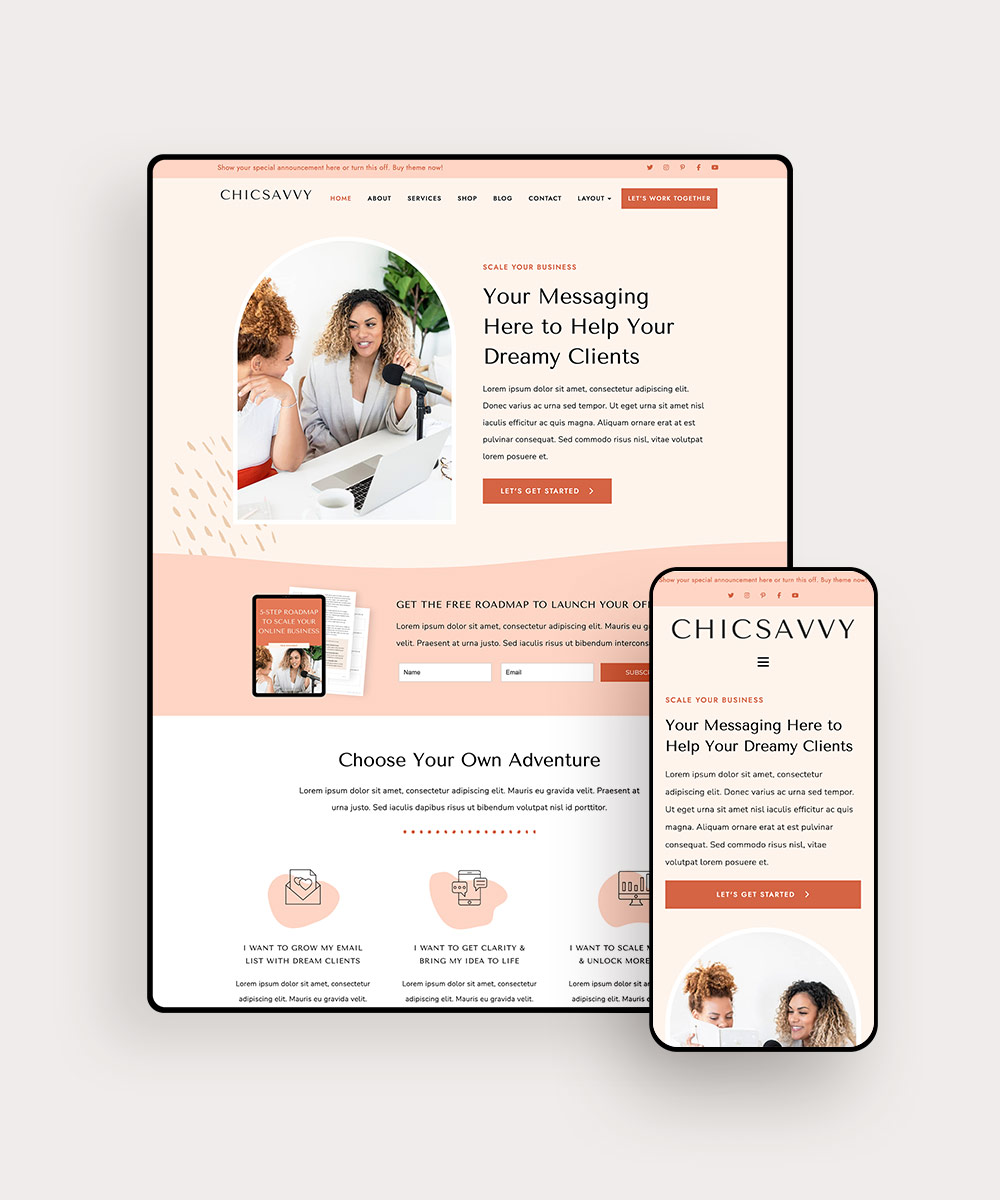

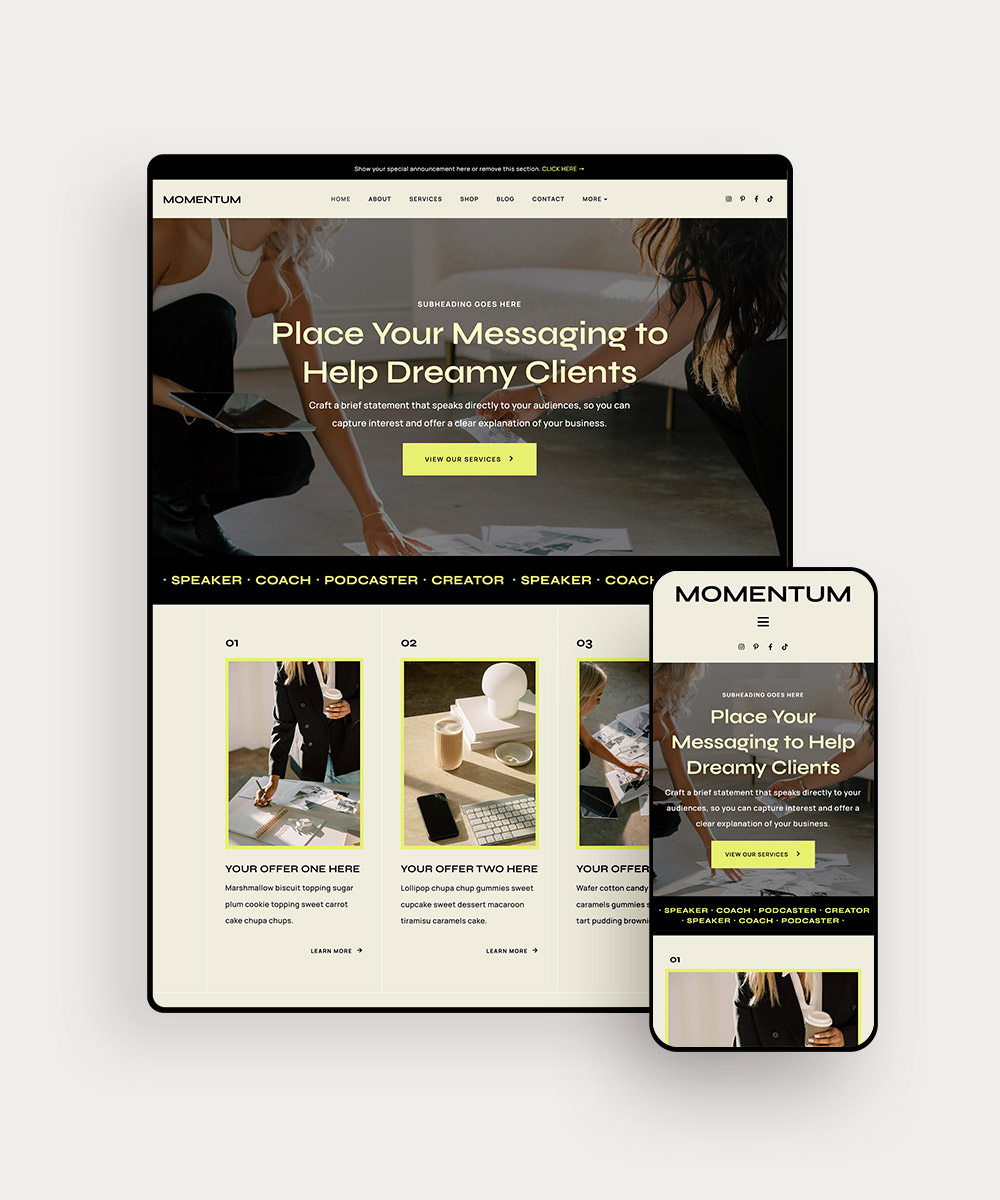

And if starting with a one-page website feels like the right approach, keep an eye out — we’re currently working on something designed specifically for this streamlined style of website.
Sometimes the most effective website isn’t the biggest one. It’s the one that gets your business online and working for you sooner.