
If you are planning a new website or redesigning your current one, you might be wondering: do you really need a full website with multiple pages?
It is easy to assume that a professional website must include a homepage, an about page, several service pages, and perhaps even a blog. That type of structure can work well for some businesses, but it is not always necessary.
Today, many service-based businesses operate successfully with a one-page website that clearly explains their offer and guides visitors toward a single next step.
Understanding the difference between a one-page website vs full website can help you choose a structure that fits your business goals without adding unnecessary complexity.
In this post, we’ll look at how each type of website works, when a one-page website makes sense, and how to decide which structure is right for your business.
PIN THIS POST FOR LATER!


What Is a One-Page Website?
A one-page website is a website where all essential information appears on a single page, organized into clearly structured sections.
Visitors can move between these sections by scrolling or by clicking navigation links that jump to different parts of the page. Instead of opening separate pages, the navigation simply scrolls to the relevant section.
This creates a smooth experience where visitors move through your website like a story.
For example, someone might land on your website and immediately see a headline explaining what you do. As they scroll down, they learn about your brand, see examples of your work, read testimonials, and eventually reach a section inviting them to contact you or book a consultation.
All of this happens within a single page. A typical one-page website includes sections such as:
- Hero introduction explaining what you do and who you help
- About or brand story that introduces your business
- Services or offer overview explaining how you help clients
- Testimonials or credibility markers showing proof of results
- Process or “how it works” section describing your workflow
- Call-to-action section inviting visitors to contact or book a call
Because everything appears in one continuous layout, visitors can quickly understand what you offer without navigating through multiple pages.
This focused structure is one reason many consultants, creatives, and service providers choose a one-page website for their small business.
Related post: How to Position Your Business to Attract Premium Clients
What Is a Full Website?
A full website, often called a multi-page website, organizes information across several separate pages connected through a navigation menu.
Instead of placing everything on one page, each section of the website has its own dedicated page. This allows visitors to explore specific topics in more detail.
Most traditional websites include pages such as:
- Homepage
- About page
- Services page
- Portfolio page
- Blog or resources
- Contact page


Each page focuses on a specific topic, which makes it easier for visitors to find the information they need.
This structure works especially well when a business offers multiple services or needs space to explain its work in more detail. For example, a design studio might create separate pages for branding services, website design, and ongoing support.
A multi-page website also provides more opportunities to target different search topics.
For instance, individual service pages can rank for specific keywords related to those services. Over time, this helps the website appear in search results for a wider range of searches.
Another advantage of a multi-page website is flexibility. As your business grows, you can add new pages without disrupting the rest of your site structure. This allows your website to evolve alongside your services and marketing strategy.

One-Page Website vs Multi-Page Website: What’s the Difference?
When comparing a one-page website vs. a multi-page website, the main difference lies in how information is organized.
A one-page website keeps all key information within a single page divided into sections. A multi-page website distributes content across several pages connected through navigation.
Both structures can work well depending on the needs of the business.
A one-page website tends to work best when the message is focused and the offer is simple. A multi-page website becomes useful when you need space to explain multiple services or expand your content over time.
| Feature | One-Page Website | Multi-Page Website |
| Structure | Single page divided into sections | Multiple dedicated pages |
| Navigation | Scroll or jump links | Menu navigation |
| Best for | Focused service businesses | Businesses with multiple offers |
| Setup time | Faster to launch | Requires more planning |
| Flexibility | Best for simple offers | Easier to expand as business grows |
Related post: 7 Small Business Homepage Mistakes (And What to Include Instead)
When a One-Page Website Is the Smarter Choice
When comparing a one-page website vs full website, the best option often depends on the type of business you run and how much information you need to present.
Here are several situations where a single-page website can be an excellent choice.
1. You Are Launching a New Business
When you are launching a new service or validating a business idea, simplicity can help you move forward much faster.
Instead of spending weeks building a large website with multiple pages, a one-page layout allows you to present your offer clearly and begin attracting clients right away. You can focus on the essentials: what you offer, who you help, and how someone can work with you.
For many entrepreneurs, the biggest challenge at the beginning is not building the perfect website. It is getting their services in front of the right people. A one-page website helps remove that barrier.
As your business grows, you can always expand the site later by adding new pages, resources, or content.
2. You Offer One Core Service
If your business revolves around one primary service, spreading information across several pages may not always be necessary.
For example, a brand designer might focus exclusively on brand identity packages, or a photographer may specialize in wedding photography. In these situations, the core message is straightforward and does not require multiple service pages.
A one-page website allows you to guide visitors through a simple narrative that explains your services clearly. They arrive on the page, learn what you do, understand how your service works, and see examples or testimonials that build trust.
From there, the page naturally leads them to the next step, whether that is booking a consultation, filling out a contact form, or learning more about your process.
3. You Want a Clear Client Journey
A one-page website naturally creates a guided experience for visitors.
Instead of asking someone to click through several pages to understand your services, the page walks them through a clear story. Visitors start with an introduction to your business, then learn about your services, see testimonials, and finally reach a call-to-action inviting them to contact you or book a consultation.
This structure removes friction. Visitors do not need to decide where to click next or search for the information they need.
For service-based businesses, this type of focused journey can make the website feel more intuitive and easier to navigate. When the message is clear and the path forward is obvious, visitors are more likely to take action.
4. You Want to Launch Your Website Faster
Building a traditional multi-page website can take significant time.
Each page needs its own layout, copy, and design. Writing an about page, service descriptions, and additional content often turns the process into a larger project than expected.
A one-page website simplifies the process because everything lives within a single structured layout. Instead of managing multiple pages, you focus on presenting your core message clearly in one place.
For many entrepreneurs and small businesses, this approach makes it possible to launch a professional website much sooner while still communicating their services effectively.

When a Multi-Page Website Is the Better Choice
While a one-page website works beautifully for many businesses, there are situations where a multi-page website is the more practical option.
In these cases, spreading information across several pages can make your website easier to navigate and easier to expand as your business grows.
1. You Offer Multiple Services
If your business provides several services, separate pages make it much easier to explain each offer clearly.
For example, a design studio might offer branding, website design, and ongoing website support. Each service has a different process, different outcomes, and different types of clients.
Creating dedicated pages allows you to describe each service in more detail, share relevant examples, and answer questions potential clients may have.
It also helps search engines understand what each service page is about, which can improve your chances of appearing in search results for those specific services.
2. You Run an Online Shop
If your business includes an online shop, a multi-page structure becomes essential.
Online stores require product listings, category pages, product descriptions, and checkout pages. Each of these elements needs its own page in order to function properly.
Trying to include an entire shop within a single page would quickly become confusing for visitors and difficult for a business owner to manage.
A multi-page structure keeps products organized and allows customers to browse your shop in a way that feels familiar and easy to navigate.
3. You Need More Detailed Information
Some businesses simply need more space to explain what they offer.
For example, companies that provide complex services, educational programs, or detailed consulting processes often need room to describe how their work is structured and what clients can expect.
A multi-page website makes it easier to organize this information. Instead of presenting everything in one long page, content can be grouped into clear sections across different pages.
This approach helps visitors find the information they are looking for more quickly.
4. You Plan to Expand Your Website Over Time
Another advantage of a multi-page website is flexibility as your business grows.
As you introduce new services, resources, or content, additional pages can be added without disrupting the rest of your site.
This makes it easier to scale your website gradually instead of redesigning it every time your business evolves.
Many businesses eventually transition from a one-page website to a multi-page structure for this reason.

Can a One-Page Website Still Rank on Google?
One common question in the one-page website vs full website discussion is whether a single-page website can rank in search engines.
The answer is yes.
Search engines evaluate the quality, relevance, and structure of your content, not just the number of pages on your website.
To improve SEO for a one-page website:
- Use clear section headings
- Include relevant keywords naturally
- Optimize images and page speed
- Provide valuable information for readers
Many businesses also pair a simple website with blog content over time as their marketing strategy grows.
Related post: WordPress SEO Basics to Help You Show Up More Online
One-Page Website vs Full Website: The Short Answer
If you are deciding between a one-page website vs a full website, here is the short answer.
Choose a one-page website if you:
- offer one primary service
- want a simple client journey
- need to launch your website quickly or test an idea
Choose a multi-page website if you:
- offer several services
- need room for detailed content
- plan to expand your website over time
Both options can work well. The right choice depends on how your business operates and how much information you need to present.
Many businesses actually start with a one-page website and expand into a multi-page structure as their services grow.

FAQs About One-Page Websites and Full Websites
Not always. If your business has one main service and one clear next step, a one-page website can be enough to introduce your brand, explain what you offer, and invite people to contact you.
Some websites need several pages, especially if they offer multiple services or publish blog content. But if your offer is simple, the same information can often fit into a well-structured one-page layout without feeling incomplete.
Yes. One-page websites work well for consultants, freelancers, coaches, and other service providers who want a clear, focused client journey. Instead of clicking through several pages, visitors can scroll through one page and quickly understand what you do and how to work with you.
A one-page website makes sense when you have one main service, one clear goal, or a simple client journey. A full website is usually better if you offer several services, need separate pages, or plan to publish regular content.
Usually, yes. With only one page to update, it’s easier to keep your content current. That’s why one-page websites are popular for new service businesses that want something simple, professional, and easy to manage.
Yes. With WordPress and Elementor, you can create a one-page website using a pre-designed template, so the layout and sections are already organized for you.
Related post: 6 Real Examples of Website Templates for Virtual Assistants
Choosing the Right Website Structure for Your Business
Choosing between a one-page website vs a full website ultimately comes down to the needs of your business.
If your services are focused and you want a streamlined way to introduce your brand, a one-page website can be an effective starting point. It allows visitors to quickly understand what you offer and how they can work with you.
If your business includes multiple services, products, or content areas, a multi-page website may provide the flexibility you need as your business grows.
At Bluchic, we design website templates specifically for service-based businesses that want a professional and strategic online presence.
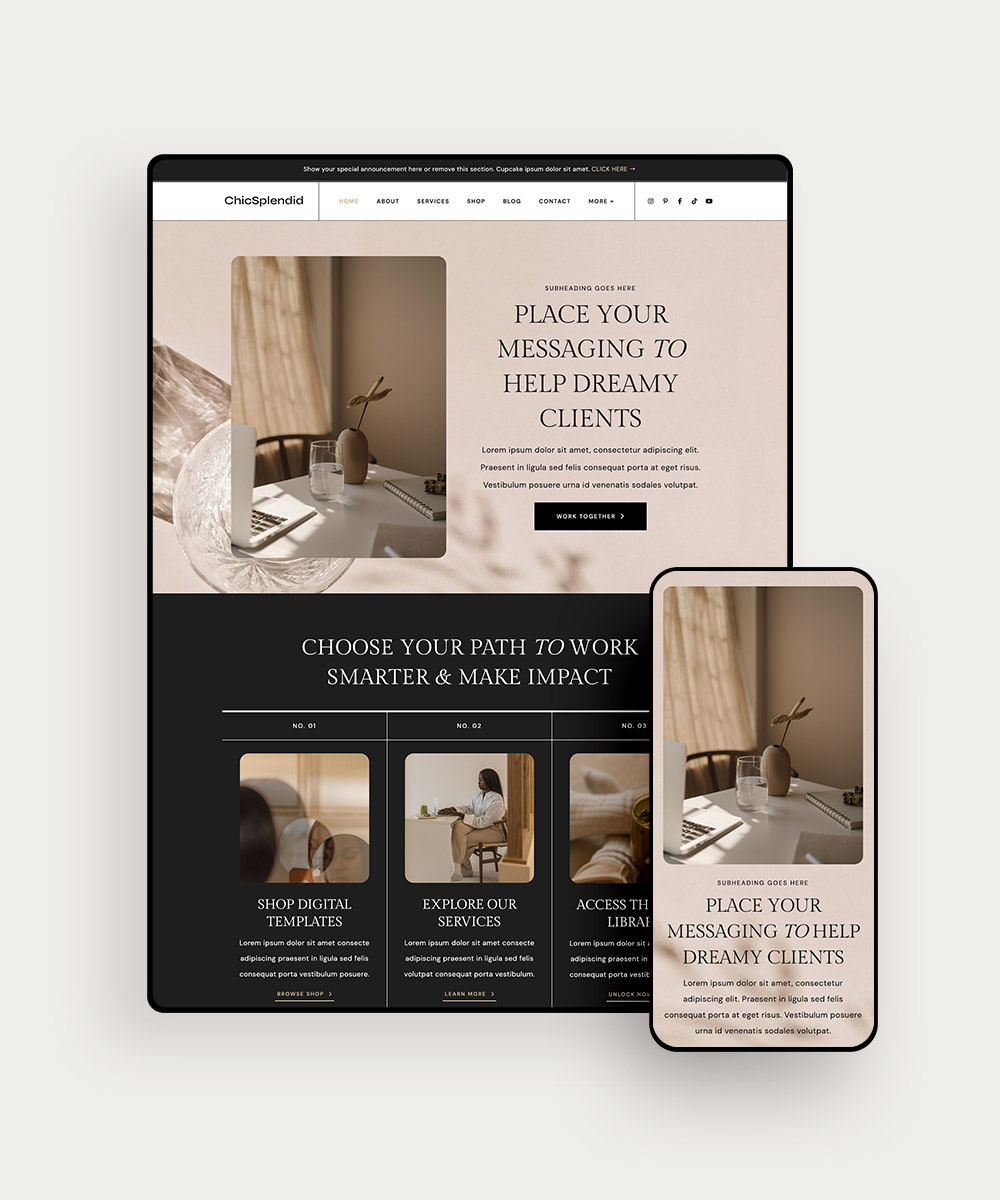
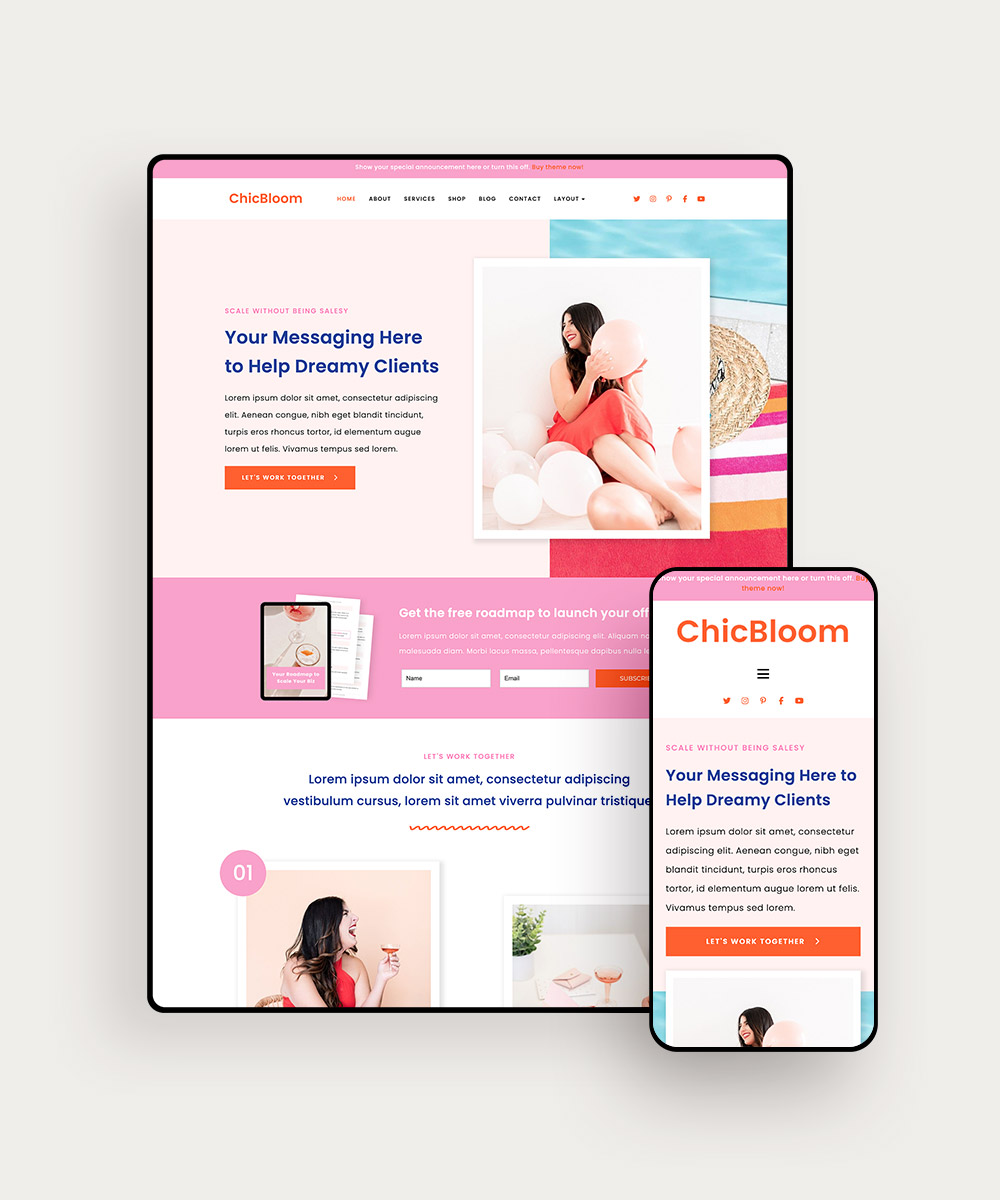
If you are planning a multi-page website, you can explore our WordPress themes and Elementor templates in the Bluchic shop.


And if you are considering launching a one-page website, keep an eye out. We have something new coming soon, designed for this streamlined style of website.
Because the most effective website is not always the largest one.
It is the one that clearly communicates your value and helps the right clients take the next step.